
The substance
How a body horror movie tells a fable of double standards, greed, and loneliness

SPOILERS: DO NOT READ IF YOU PLAN TO WATCH THE MOVIE
TW: UNSAVORY IMAGES MAY PROVOKE FEAR AND DISGUST
I’m not a connoisseur of the horror genre but I appreciate the way that these movies—exalted by a cult of diehard fans or shunned by those who are afraid of loud noises—can elicit intense emotions and deliver social commentary in a way that no other genre can accomplish. While there are disappointing movies like the controversial Skinamarink, which made me doze off multiple times, horror movies are usually very impressive to watch. One of my recent favorites is Talk to Me by A24 Studios, which depicts the ravaging experience of drug abuse, touching on the fine line between pleasure and addiction.
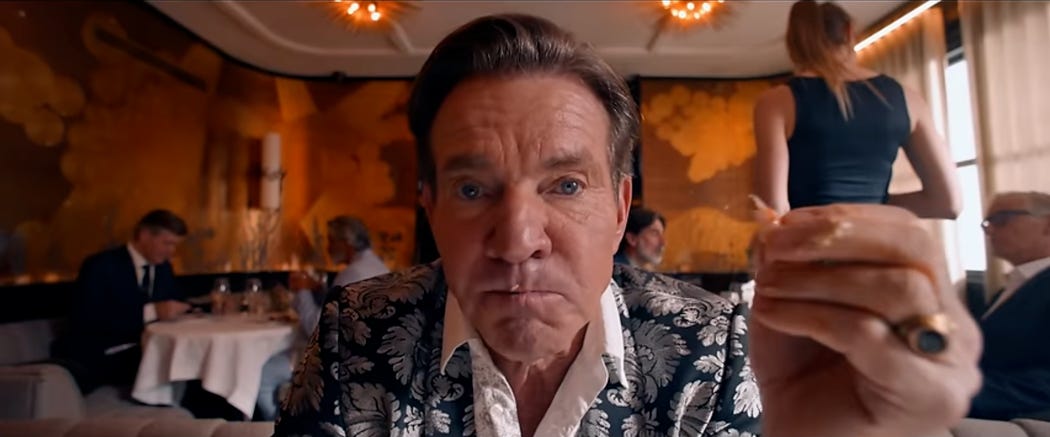
Recently, I watched The Substance, a movie that won the Cannes Film Festival award for Best Screenplay of 2024 and stars Demi Moore opposite Margaret Qualley. I went into the movie with zero expectations or any knowledge of the film’s premise. Quickly, I picked up on the roles of each character in the film. Moore’s character, Elisabeth Sparkle, is a 50-year-old Hollywood star who is facing career extinction. The director of the fitness show that she stars in is an equally old but much more physically unattractive human being, portrayed clearly in the scene where the viewers are assaulted with a close-up shot of his wrinkled lips smacking on a giant plate of greasy shrimp. This marks the first obvious juxtaposition of the two characters. Elisabeth Sparkle is active, energetic, and beautiful, but even she is not invincible against the director’s clear preference towards younger women and his power to determine the outcome of the show, and by association, her life.
Double standards of gender
It’s quite obvious that the director is a character we are supposed to hate. He embodies the stereotypical Hollywood executive that fuels the misogynistic and ageist culture prevalent in all entertainment industries. He clearly uses women as objects and a tool for his success—the younger and prettier, the better. When Elisabeth Sparkle overhears his phone conversation in the men’s bathroom about how he wants to replace her with a younger star, a feeling of dread sets in that is later amplified when she sees workers removing a billboard poster of her face, causing her to crash in a car accident. This is a plot-driven moment that introduces her to “the substance,” which is a drug that magically splits you into two halves: your old normal self and a newer more perfect one. Driven by her desperation to regain her youth and beauty, she takes it, becoming a new character called Sue. But of course, there’s a caveat: you have to switch back and forth between the two bodies every 7 days with no exception. We later find out that the consequence of not abiding by this rule is that you suck the life out of the other body. But this rule sounds relatively easy to follow, so no worries, right? Then you start observing the glitz and glamour of Sue’s life as her career replacing Elisabeth Sparkle on the fitness show burgeons, launching her into an overnight success as she is endlessly praised by the director who had nothing short of indifferent neglect for her before. In exchange for extending this new life, however, Elisabeth’s body begins to deteriorate, starting with a decrepit index finger and then her whole leg, eventually spreading to her whole body like an irreversible disease.
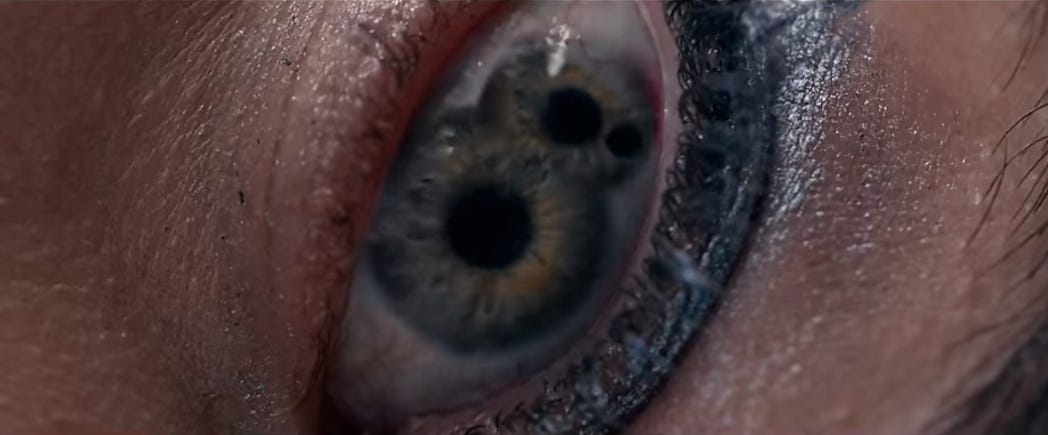
What I found very interesting is that besides the main character and her younger counterpart, there aren’t many female characters in the film. Almost everyone else is a man. First, we have the director. He is blissfully unaware of Elisabeth’s emotional suffering and discards her like a sacrificial pawn in a chess game. As far as the movie plot goes, he is an enemy. He holds the key to her success and doesn’t face any repercussions for his actions. Men can age with power, but women? Women age out of it. Because for Elisabeth, or more accurately Sue, her power is deeply intertwined with her youth, beauty, and controlled poise. Meanwhile, the director, with his unremarkable physical appearance and crude speech patterns, gets to hold onto his power in a way that women would never be able to with those unattractive characteristics. We see many examples of influential men and women held to very different behavioral standards. For example, Taylor Swift has been scorned by her fans for her high carbon footprint with her excessive private jet use, while Travis Scott is still able to attract listeners to his concerts despite taking little accountability for the fatal negligence exhibited at Astroworld. Although there are stronger parasocial elements at play when it comes to female celebrities, in general, a woman needs to be perfect in most parts to deserve the adoration and respect of both men and women.
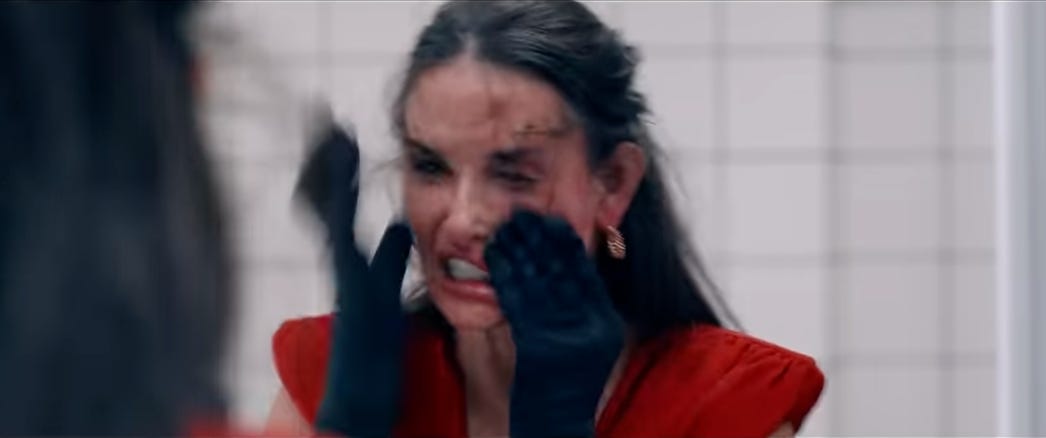
The second important male character is a former classmate of Elisabeth’s, who runs into her outside the hospital where she is treated post-car accident. Fred is an awkward nerd who stumbles over his words and drops a piece of paper into a muddy puddle and fishes it out to scribble his phone number on it before giving it to Elisabeth. In that moment, she is a little repelled by his social ineptness and servile attitude towards her. Later in the film, however, when she experiences her first body decay and subsequent need for companionship, she musters up the courage to ask Fred on a date. Normally, Elisabeth Sparkle would not have batted an eye at Fred, but now she is a living corpse grasping onto what is left of her celebrity charm. This feeling is clear as we, the viewers, are led to believe that the prolonged silences on the phone with Fred are a result of him not wanting to go out with her anymore, when in reality he is just in utter shock at the prospect of this date. Elisabeth then frantically gets ready for the date, throwing on a body-hugging red dress and a face full of makeup, but she quickly descends into madness, wiping and redoing her lipstick, covering her cleavage with a silk scarf, and ultimately failing to even make it out the door. From an outside perspective, we are perplexed by this reaction. She is still the beautiful Elisabeth Sparkle with only a minor blemish in her physical appearance that she adequately covers with gloves. But instead, she is beating herself up for how she looks, while leaving poor Fred worried and on read. Beauty is subjective, and the differences between the standards for men and women are made apparent in this film, through the use of horrific imagery of age wreaking havoc on Elisabeth’s body. It highlights a painful realization for many girls as they grow up that they have to put significantly more effort into embellishing their physical appearances while guys can get away with looking like Adam Sandler or Pete Davidson. Women over-analyze themselves in the mirror and develop body dysmorphia because, at one point in their lives, they are subjected to some flippant comparison between themselves and a more attractive woman. The awareness of her fleeting beauty expedites Elisabeth’s demise. Her self-esteem is utterly damaged to the point of no return, and not even the caring and unassuming personality of Fred can save her.
Other notable male characters include her spineless neighbor, the doctor’s assistant who slipped the substance into her coat pocket, and the nameless, monotone-voiced mystery man behind the company that creates the substance. The doctor’s assistant, in particular, is an interesting character, because he, like Elisabeth, fell victim to the substance. He writes that “it changed my life” in an ominous note, a message that reveals a double meaning when Elisabeth encounters his pitiful older version in a restaurant. Both of them made a decision that cost their lives, but while Elisabeth is frantically controlled by the ticking time bomb of her beauty, this man sits eating his meal at a local diner and appears unfazed by his physical flaws. Elisabeth has only lost her finger thus far, but we can see her emotional volatility predictably ending in total self-destruction, very unlike the temperate demeanor of this other man who has seemingly accepted his fate. Then again, isn’t this the same person who introduced her to this substance in the first place? He lurks around like a nobody, stalking her and watching her public downfall as if it were a sick vicarious experience he enjoyed. Overall, the choice of majority-male characters in this film is interesting. It emphasizes the suffocating feeling that women have when being perceived by men in their lives. Fred is starstruck by Elisabeth’s fame, her neighbor is rendered speechless by Sue’s striking beauty, and Harvey the director flip flops his behavior based on whether it’s Elisabeth or Sue. Even the motorcycle dude that Sue hooks up with one night is blatantly disgusted when he bumps into Elisabeth the day after. There is no doubt in my mind that one of the main purposes of this film is to explore the unfair double standards between men and women in modern society. It is, however, important to acknowledge that Elisabeth is far from being blameless of having any preconceived biases either; she, too, categorizes the men she meets into different boxes of social hierarchy, just in a much less obtrusive manner.
To be honest, the dichotomy of gender roles is a bit overplayed in the film industry. Perhaps that’s the reason why Barbie, in all of its blockbuster success, fell short of my expectations. It was a very novice take on the societal constructs of gender and reeked of white feminism. But I guess even such a straightforward film like Barbie disappointingly revealed that there were still many men in the real world who felt threatened by its subject matter.
Addiction? The balance of greed and acceptance
REVISION: People pointed out that they saw a stronger theme of addiction and lack of self-control in this film, rather than a cautionary message about curbing your greed. Although I also identified her lack of self-control as a major force behind Elisabeth’s bad decisions, I was perhaps a little biased in my judgment of perceiving this lack of self-control as a weak will that bends to her lofty and misguided goals, rather than purely a feeling that she can’t control. As I mention at the bottom of this section, I struggle a lot with greed and have repeatedly gone through this cycle, similar to a hedonistic treadmill, where I always recalibrate myself to a steady state of dissatisfaction after achieving any goal. I attribute this inability to feel secure and confident in one’s present state to my insatiable greed. That’s why when I watched The Substance, I saw past the simple concept of self-control, because in my personal experience, lacking self-control is a symptom rather than a root cause.
However, I can totally see that the intention of the film was to highlight this feeling of addiction through the characters of Elisabeth and Sue. The tug-of-war relationship between them represents the two sides of your mind, one telling you to be realistic and the other blinded by temporary pleasure. It’s genius and definitely intentional that the title of the film is “The Substance,” as it is a direct reference to substance abuse. Elisabeth’s body is completely overridden by dead skin, contorted bones, and rotting flesh, but she still can’t give up Sue because having youthful beauty and public adoration feels like ecstasy. As the audience catches their breath, watching as Elisabeth injects the black death liquid into Sue, which would signify her overcoming this addiction to the substance, we think “no way,” and are unfortunately proven right.
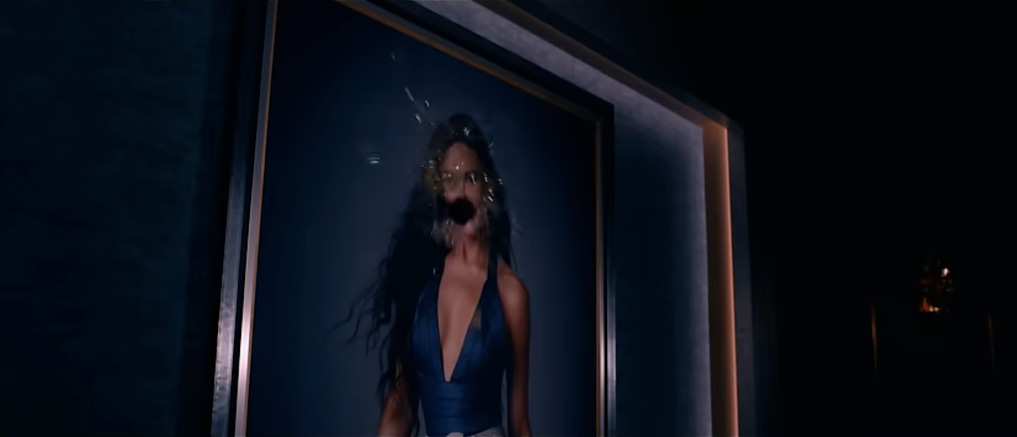
Another theme in The Substance is greed, the unstoppable feeling of always wanting more and never being content with what you have. One line of dialogue that is constantly repeated throughout the movie is “You are one. You can’t escape from yourself.” Even if you separate yourself into two halves, what you gain on one side you take from the other. This battle between Elisabeth and Sue for the reign of the substance becomes a pivotal conflict in the film. Sue, who is constantly marveling at her light and supple body and basking in her newfound glory and fame, keeps injecting jars of spinal fluid extracted from Elisabeth’s body until there is none left. Elisabeth, who is decaying rapidly every time they switch bodies, becomes furious and loses it at Sue, blaming her for taking everything away from her. She pelts eggs at her window where Sue’s billboard poster is seen and covers all the panes with a wall of newspapers. This is similar to her behavior at the beginning of the movie where she chucks the snowglobe at a portrait of herself, except now her anger and disgust are elevated to the point of insanity. From the viewer’s standpoint, this behavior seems a little contradictory. Elisabeth is Sue, and Sue is Elisabeth. They share the same desires to maintain their beauty and obtain external validation, but they cannot agree on a balanced system of coexistence between the two bodies. Sue can’t control herself from having a one-night stand or doing a Vogue cover even if she knows that the effects on Elisabeth will be devastating. Elisabeth can’t follow through with terminating Sue because she can’t let go of her pursuit of ultimate stardom, even though she knows that Sue will literally kill her.
The problem with greed is that it’s incredibly short-sighted. When we are caught up in the euphoric effects of a short-term gain, we sacrifice something else in the long-term. There are a lot of beauty treatments and body modification surgeries out there that are known to have harmful side effects or potentially disastrous outcomes. For some, once you start that journey, you can’t stop. That’s the main reason I will probably never go near plastic surgery. I have a myriad of physical attributes that I would change about myself, but I know that once I start down that path, there will be no end in sight. I struggle with greed in other aspects of my life as well and I often think that there may never be a point in my life where I am fully satisfied with who I am. Who am I? Is there a better version of myself? Would I do anything to achieve it?
Superficiality and loneliness
I think the primary factor that led to the deaths of Elisabeth, Sue, and their collective dream is the title of the movie: substance. Not the black market drug that destroyed them, but the lack of personality and soul that lies beneath their exterior. Every one of Elisabeth’s actions is a reaction to the way other people look at her. Her life is characterized by hopeless isolation as she has no friends or emotional support system. Her apartment is enveloped by huge glass windows that represent how she feels constantly exposed in the public eye; the only decorations in her living room are a giant self-portrait and a counter of small trophies, which show the shallowness of her self-perception; the white and sterile all-surrounding tiles of her bathroom where she undergoes the body switch are a prison that her mind is trapped in that is devoid of any color and life. When the other man asks her about her loneliness, it’s almost as if Elisabeth finally realizes the crux of all her suffering. That is why she goes home and calls Fred to go on a date. But she can’t do it, because she already feels like she’s losing her beauty and she knows that’s all she has to offer.
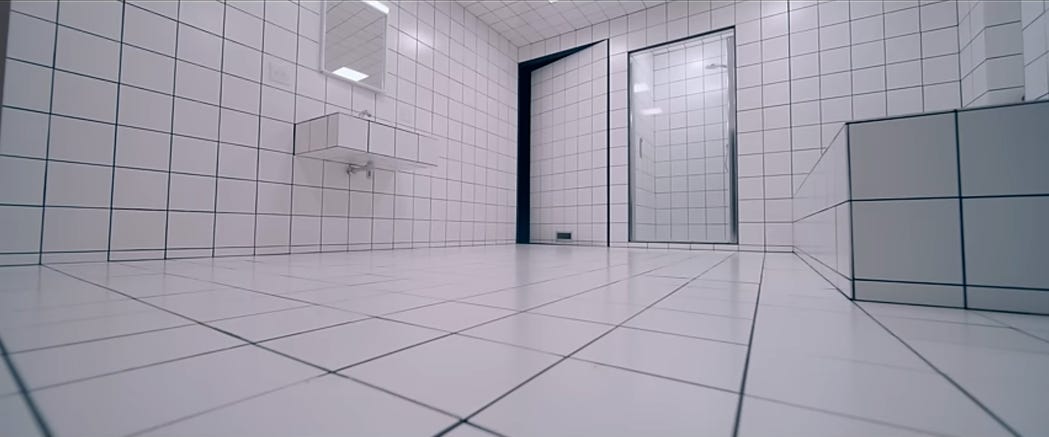
For some reason, although the movie was supposed to be terrifying in all the gruesome ways that it explored body horror, I wasn’t as scared as I expected myself to be. Did I develop more resilience to gore since I saw Midsommar or was the film purposefully… not that scary? It was jam-packed with the same ogling shots of Sue’s butt in her tight pink latex bodysuit to the point that her body was no longer appealing to look at. The shots degraded her entirely to skin, fat, and bones. In parallel fashion, Elisabeth’s grotesque final form was a tumbleweed of human organs that looked like a result of some artist tuning the CGI to the extreme. Pearly white teeth were sticking out in random places and saggy breasts were hanging like testicles. I don’t know how else to describe it, but it felt like there was also no substance to the horror. Although, I didn’t mind not being scared; in fact, it freed my mind up to enjoy the cinematography and soundtrack choices that the film made.

Bringing the topic of aesthetic superficiality back to center stage, I think the film poses an interesting question of whether certain beauty trends are worth it. There’s been an undeniable surge in beauty-enhancing treatments beyond just cosmetic surgery: botox, lip injections, buccal fat removal, and ozempic, you name it. I remember that Love Island UK poster of all the women contestants circulating because people were ridiculing them for how they all looked 20 years older and in the exact same way: dark orange tans, stretched skin across their cheeks, and lips that you know did not come pre-installed with their white genes. Then there were also compilations of celebrity photos where all the faces shared the same carved-out shape in their cheeks because of their buccal fat removal. And suddenly, the Kardashians who used to be a walking ad for big curves and BBLs are now skinny? Realistically, most of these extreme trends don’t affect me personally, but it’s impossible to avoid the smaller, less invasive ones. Influencers are saying that microblading changed their lives. People have been getting lash extensions since forever. Laser hair removal is like a rite of passage. More and more people my age are getting botox injections and I’m sitting here worried that I’m not engaging in some preemptive measure to preserve my youthful beauty too. Are we really so afraid of our natural bodies and physiological instincts that we must resort to cosmetic intervention? The real horror is that as more and more of these procedures sprout up, we start to overvalue physical appearances and devalue our personalities and individuality.
The real epidemic isn’t ozempic, but loneliness. When we feel like we are missing something on the inside, we fill that gap with something on the outside. That is what spurs Elisabeth to take the substance, because that’s exactly what she’s missing.